- 작성일 2026.04.01
- 작성자 고려대학교 세종캠퍼스
- 조회수 2

Research team utilizes natural microstructures to enhance next-generation large-area and flexible OLED performance
Korea University Sejong Campus has announced that a research team led by Professor Baek Seungpil of the Department of Biotechnology and Bioinformatics has developed a technology to dramatically increase the luminous efficiency of Organic Light-Emitting Diodes (OLEDs) using diatomite, a micro-mineral sourced from nature.
This research introduces a low-cost, eco-friendly technology that enhances the performance of next-generation large-area and flexible OLEDs by utilizing natural microstructures, bypassing the need for expensive nanomaterials or complex manufacturing processes.Through this study, the research team presents new possibilities for sustainable optoelectronic material design.
The project involved Professor Baek (Corresponding Author) and Dr. Kiha Min (Co-First Author) from the Research Institute of Industrial Technology at Korea University Sejong Campus, along with Dr. Changmin Lee (First Author) and Professor Seungyun Ryu (Co-Corresponding Author) from Dongguk University, and Professor Kyeongho Kim (Co-Corresponding Author) from Kyung Hee University.
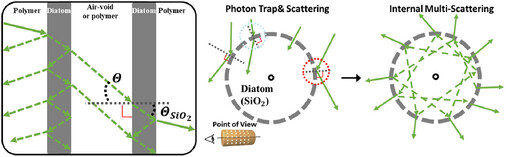
△Graphic abstract
Diatomite is a porous silica mineral formed by the fossilized remains of diatoms, characterized by micro-pores and complex three-dimensional structures. By integrating diatomite into OLED devices, the team maximized light scattering and refraction effects, significantly improving current and power efficiency compared to standard models.
The technology maintained high luminous uniformity, demonstrating that stable luminance can be secured even for large-scale panels. Furthermore, the team fabricated a large-area (1,500mm2) flexible OLED on a diatomite-integrated substrate, proving both uniform electroluminescence and excellent mechanical flexibility. The result, maintaining stable light emission even under bending conditions, serves as decisive evidence for the practical viability of biosilica-based light extraction strategies.
Dr. Min of the Research Institute of Industrial Technology stated, "By leveraging the unique optical properties and eco-friendliness of diatomite, we expect it to become a key material for improving energy efficiency in the next-generation display and lighting markets, including TVs, smartphones, and wearable devices."
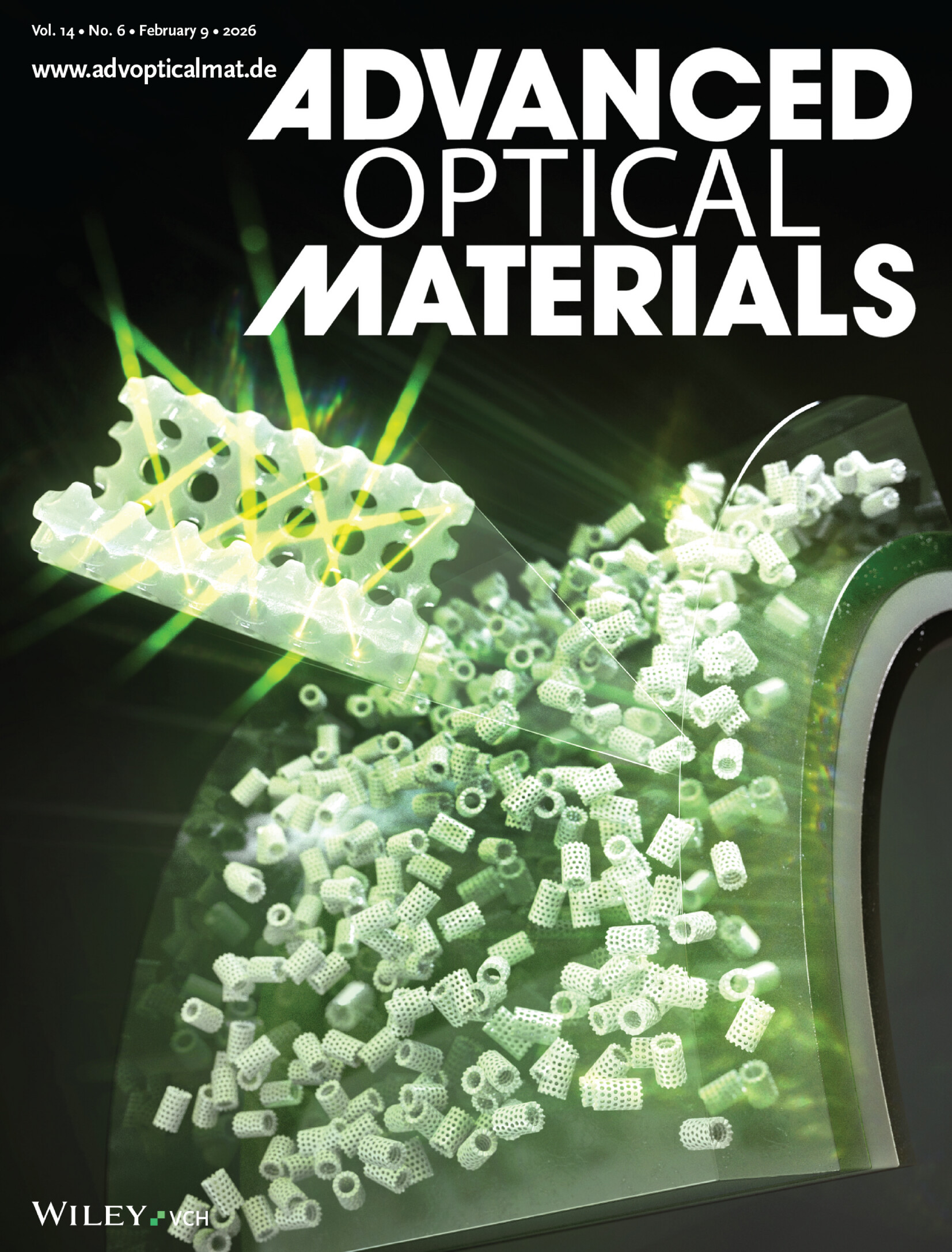
△ Front cover
The research findings were published in the February 2026 issue of Advanced Optical Materials (Impact Factor 7.2, ranked in the top 11.6% in the field) under the title “Enhancing Organic Light-Emitting Diode Performance Using Naturally Derived Diatomite: A Cost-Effective and Eco-Friendly Strategy,” and were selected as a Front Cover article.
This research was conducted with support from the Regional Leading Research Center (RLRC) program funded by the National Research Foundation of Korea.